



- English
-
English
Current location:Home > Product > Pharmaceutical API
|
Biological Activity |
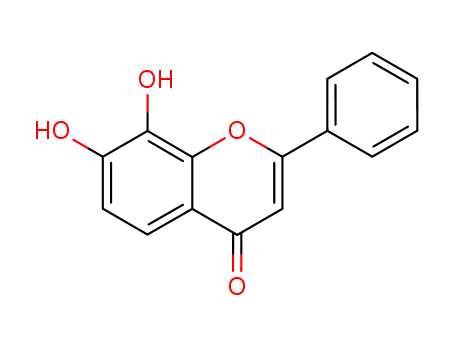
7,8-Dihydroxyflavone (7,8-DHF) is a monophenolic flavone with diverse effects. It acts as an agonist of the neurotrophic tyrosine kinase receptor TrkB (Kd = 320 nM), protecting neurons that express TrkB from apoptosis. 7,8-DHF is neuroprotective in an animal model of Parkinson’s disease. It supports emotional learning in mice and reverses memory deficits in a mouse model of Alzheimer’s disease. It also improves motor function and extends survival in an animal model of Huntington’s disease. 7,8-DHF inhibits the cytochrome P450 aromatase (IC50 = 10 μM) and, in this way, alters estrogen metabolism. It also has antioxidant action that increases intracellular glutathione synthesis and scavenges reactive oxygen species. |
|
Biochem/physiol Actions |
7,8-Dihydroxyflavone is a selective tyrosine kinase receptor B (TrkB) receptor agonist. It manifests all the therapeutic effects of brain-derived neurotrophic factor (BDNF)—such as protecting neurons from apoptosis, inhibiting kainic acid-induced toxicity, decreasing infarct volumes in stroke, and neuroprotecting in an animal model of Parkinson′s disease—without the poor pharmacokinetic profile of BDNF limiting its therapeutic potential. |
|
Side effects |
As with any other drug, 7,8-DHF is not without its side effects. However, there are not as many side effects associated with the use of 7,8-DHF as it is a natural product.The following are some reported side effects associated with the use of 7,8-DHF or products that contain it:OverstimulationRestlessnessDizzinessNauseaIrritabilityTrouble sleeping |
|
Mode of action |
7,8-Dihydroxyflavone (7,8-DHF, tropoflavin) is the most common and effective flavone identified in Sophora plants.7,8-DHF mimics the effects of brain-derived neurotrophic factor (BDNF) in brain cells by activating tropomyosin-related kinase B (TrkB) receptors, the typical target of BDNF.The therapeutic potential of BDNF is restricted due to its short half-life (less than 10 minutes) and its inability to cross the blood-brain barrier because of its large size. Unlike BDNF 7,8-DHF is able to penetrate the blood-brain barrier and enter the central nervous system (CNS) .7,8-DHF also increases the production of Nrf2. Nrf2 increases antioxidants enzymes such as heme oxygenase 1 (HO-1) and also enzymes that repair DNA (8-oxoguanine DNA glycosylase-1 – OGG1) . |
InChI:InChI=1/C15H10O4/c16-11-7-6-10-12(17)8-13(19-15(10)14(11)18)9-4-2-1-3-5-9/h1-8,16,18H
-
The invention relates to a preparation m...
With many cancers showing resistance to ...
A simple and efficient route for the syn...
Increasing parasite resistance to nearly...
C29H22O4

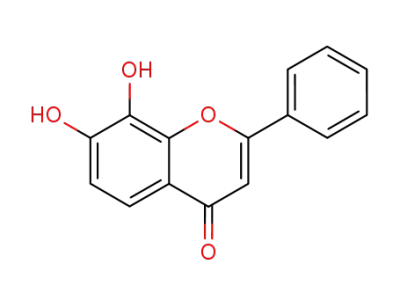
7,8-dihydroxyflavone
| Conditions | Yield |
|---|---|
|
With
palladium on activated charcoal; hydrogen;
In
tetrahydrofuran; methanol;
at 40 ℃;
under 4560.31 - 6080.41 Torr;
|
90.5% |
|
With
palladium 10% on activated carbon; hydrogen;
In
tetrahydrofuran; methanol;
at 20 ℃;
for 3h;
|
83% |
C29H18O6
7,8-dihydroxyflavone
| Conditions | Yield |
|---|---|
|
With
sodium methylate;
In
ethanol; dichloromethane;
|
63% |
|
With
water; sodium hydroxide;
In
1,4-dioxane; methanol;
at 20 ℃;
|

7-hydroxyflavone
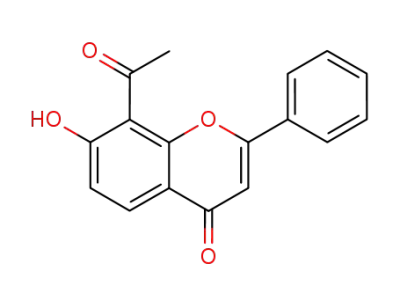
8-acetyl-7-hydroxy-2-phenyl-chromen-4-one

1-(3,4-bis-benzoyloxy-2-hydroxy-phenyl)-3-phenyl-propane-1,3-dione

ethyl 3-oxo-3-phenylpropionate
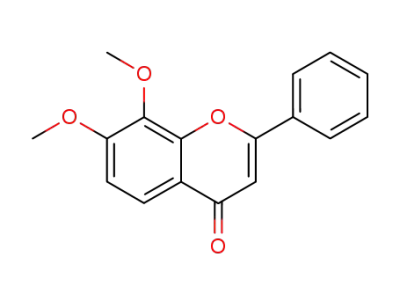
7,8-dimethoxyflavone

8-phenyl-[1,3]dioxolo[4,5-h]chromen-6-one

4-oxo-2-phenyl-4H-chromene-7,8-diyl diacetate

7,8-<3-(Ethoxycarbonyl)-ethylenedioxy>-2-phenyl-4H-1-benzopyran-4-one